WhatsApp marketing has grown rapidly over the last few years. Businesses adopted the WhatsApp Business API to send promotions, offers, alerts, and customer updates at scale. Open rates were high, engagement was strong, and it became a primary marketing channel.
But recently, many companies are asking the same question:
“Why are my WhatsApp marketing messages not delivering to all customers anymore?”
Even approved templates and valid numbers don’t guarantee reach. The reason lies in Meta’s Frequency Capping system and changing delivery controls. This shift means relying only on WhatsApp for marketing is becoming risky.
There is a big difference between sending a message and it actually being delivered. Businesses can trigger campaigns successfully but still see a WhatsApp broadcast message failure or low delivery rate.
Here’s why:
Meta applies user-level message limits
Marketing messages can be silently throttled
Delivery depends on user behavior, not just template approval
Even compliant businesses may face reach restrictions
In short, WhatsApp marketing messages not delivering is now an engagement and ecosystem control issue, not a technical one.
Meta frequency capping is a system that limits how many marketing messages a user can receive from businesses within a specific period.
Meta introduced this to:
Prevent spam
Protect user experience
Reduce message fatigue
Ensure WhatsApp remains a personal communication platform
Marketing messages (offers, promotions, sales campaigns) are more heavily regulated. Utility or service messages (alerts, confirmations, reminders) are less likely to be restricted because they are considered essential communication.
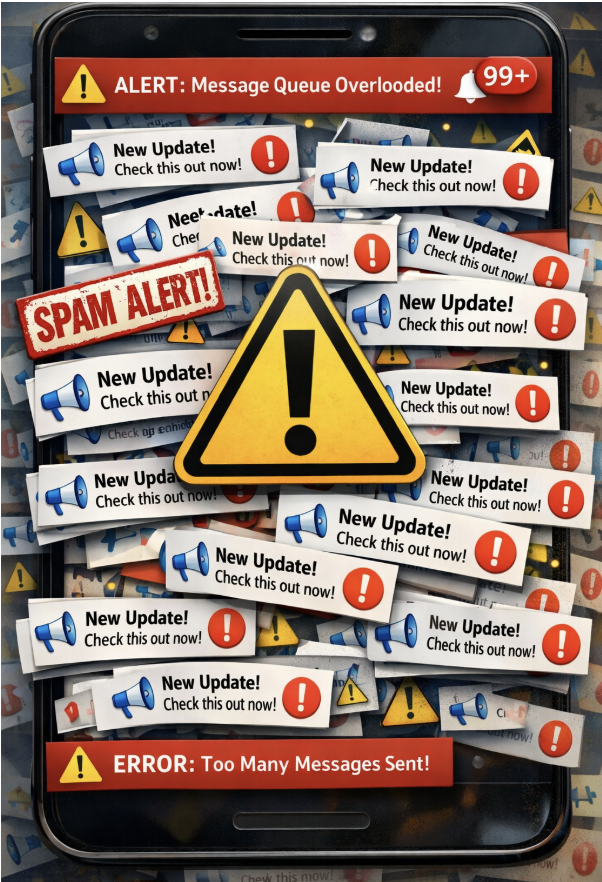
Meta’s system evaluates users individually. Delivery decisions are made at the customer level, not just the business level.
Factors include:
Past engagement with business messages
Reply history
Button clicks or interactions
Signs of message fatigue
Overall responsiveness to promotional content
If a user consistently ignores marketing messages, Meta assumes disinterest and may temporarily block further promotional delivery.
Businesses may see warnings like:
“The messages were not delivered to maintain a healthy ecosystem engagement.”
This means marketing messages can fail for 24–48 hours, especially if the user has not engaged recently.
This shift creates serious challenges:
Reduced campaign reach
Lower engagement rates
Missed conversions and sales
Unpredictable marketing performance
High dependency risk on a single channel
Businesses that relied only on WhatsApp now face unstable results.
Certain practices increase the chance of frequency capping:
Over-broadcasting promotional content
No audience segmentation
Repetitive campaigns
Messaging inactive users continuously
These actions send negative engagement signals, which reduce future delivery.
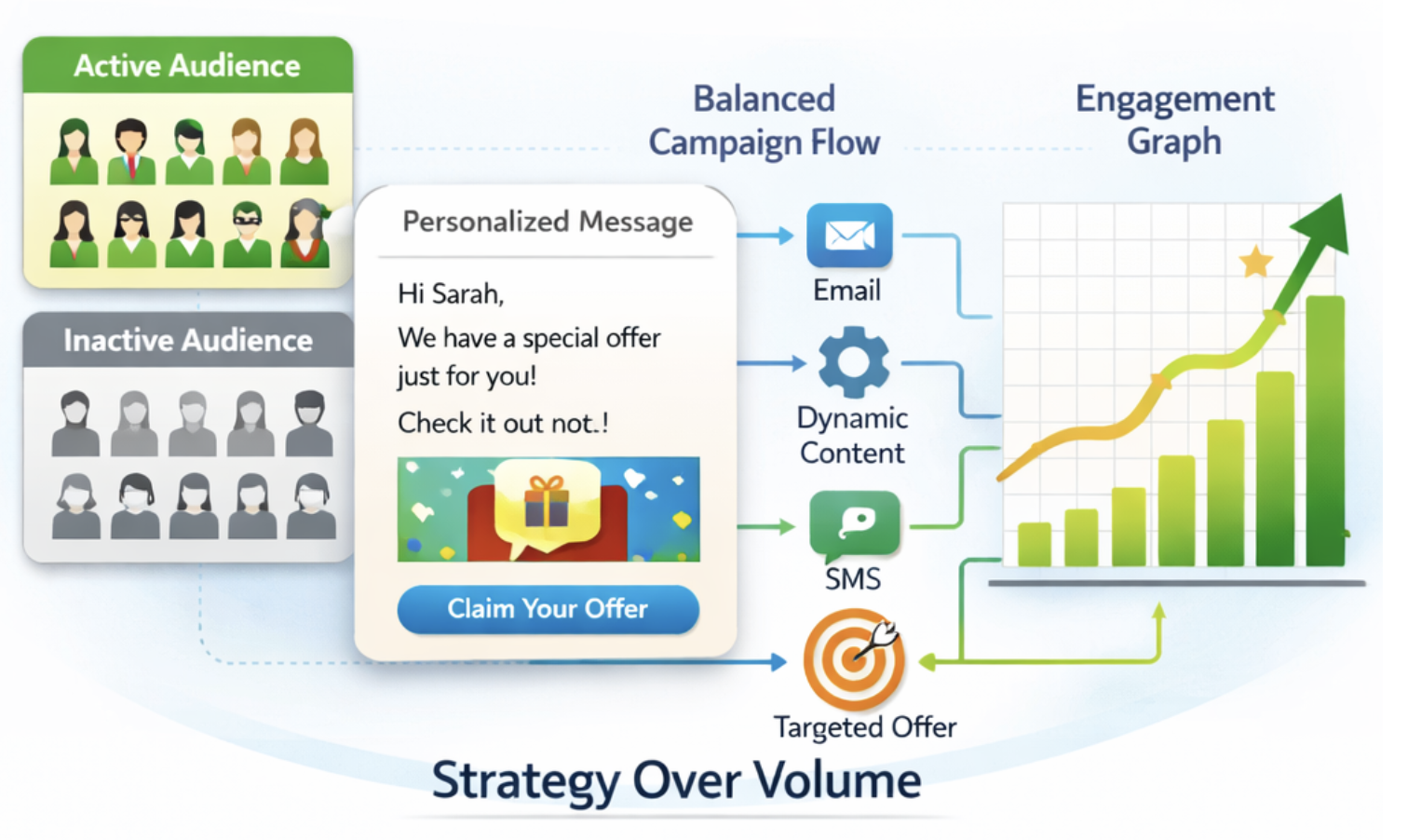
Businesses must shift from volume to strategy.
Avoid sending frequent promotions without interaction.
Active and inactive users should receive different communication.
Generic messages lead to low engagement. Keep responsive buttons in messages
Service-based communication helps maintain engagement health.
Avoid sending messages to cold data. Prefer to get opt-in for messaging from users
Mention in message footer about Opt-out/Unsubscribe to avoid User Spam report
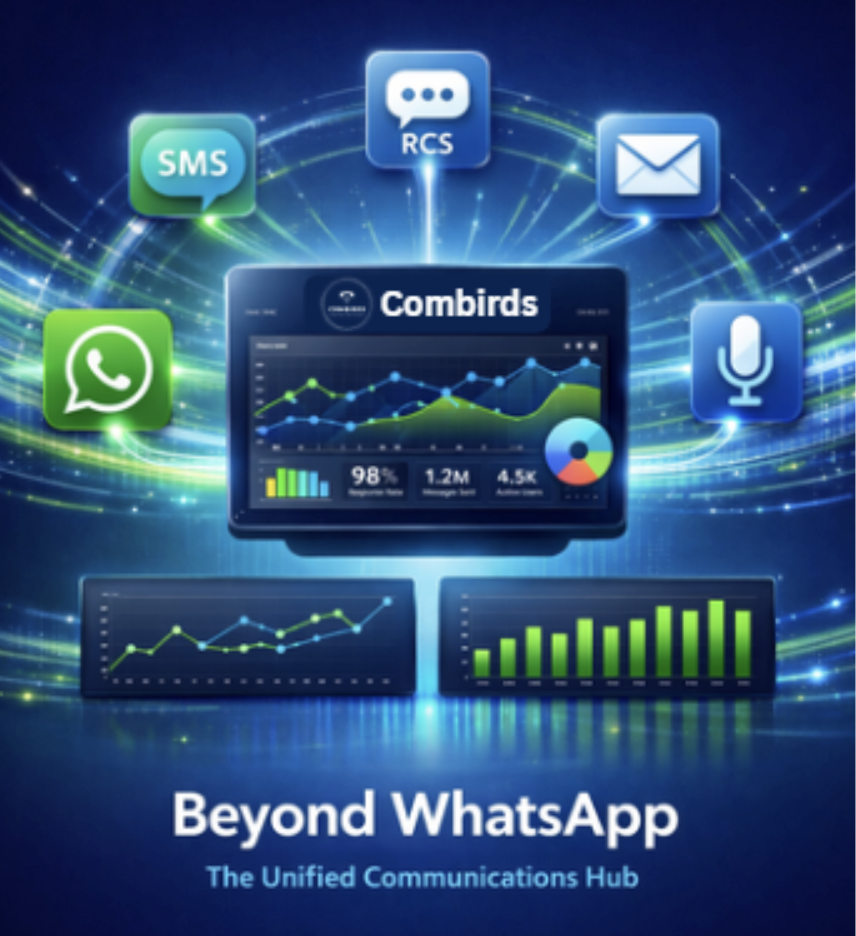
Because WhatsApp marketing message limits are user-controlled, businesses cannot guarantee 100% reach anymore.
Customers are present across multiple channels, and message redundancy ensures communication continuity. A multi-channel approach protects businesses from sudden delivery restrictions on any single platform.
Combirds provides a unified communication platform beyond WhatsApp.
High reach and reliability. Ideal for alerts, reminders, OTPs, and time-sensitive campaigns.
Rich media, branding, and interactive experiences like Whatsapp. A strong alternative when WhatsApp delivery drops
Bulk Voice Campaigns, Missed call campaigns, IVR communication, and voice alerts.
Best for long-form communication, onboarding flows, and nurturing sequences.
Combirds is more than a messaging provider — it helps businesses adapt to the new engagement-driven environment.
Unified platform for WhatsApp, SMS, RCS, Voice, and Email
Smart channel fallback strategies to maintain delivery
Compliance-first campaign planning aligned with Meta policies
Centralized analytics and reporting for performance tracking
Engagement-focused messaging strategy to reduce WhatsApp delivery risks
Dedicated Support & Free Onboarding - to ensure Complete guidance along with trial.
This ensures businesses continue reaching customers even when WhatsApp marketing messages are not delivering fully.
| Factor | WhatsApp Only | Multi-Channel with ComBirds |
|---|---|---|
| Reach Stability | Variable | High |
| Delivery Dependence | Engagement-based | Distributed |
| Conversion Consistency | Unpredictable | Stable |
| Risk Level | High | Reduced |
Because Meta now limits marketing message reach based on user engagement behavior.
Yes. Marketing messages are more likely to be restricted than utility or service messages.
It’s risky. Frequency capping can reduce reach without warning.
Combirds provides a unified CPaaS platform covering WhatsApp, SMS, RCS, Voice, and Email with smart delivery strategies.
WhatsApp remains powerful, but its marketing reach is now controlled by engagement signals and frequency limits. Businesses that depend only on WhatsApp risk losing communication continuity.
The future of customer communication is multi-channel, engagement-driven, and compliance-focused.
Combirds helps businesses maintain reach, improve engagement, and protect conversions across every major communication channel.




 SMS Campaign & OTP APIs
 Business Whatsapp API
 Google RCS
 Voice and IVR
 Email Marketing and API
 Whatsapp Campaign & API Integration
 Whatsapp Chatbots
 Whatsapp Live Agent Chat
 Finance
 Food & Beverages
 Healthcare
 Real Estate
 Retail & Ecommerce
 Combirds Blogs
 Documents
 9140672875